Why I traded the OR for a boardroom....for impact
It was August in Texas, and the heat hit like a physical wall the second I stepped outside.
I was not in an air conditioned operating room. I was walking up a cracked concrete path to a mobile home to see a patient named Maria. The window mounted air conditioning unit hummed desperately against the rising temperature.
This was my third attempt to find her. We had previously been unable to find her trailer after two attempts to work through an interpreter, poor phone connections, and constantly changing locations of residence.
Standing on that porch, sweating through my scrubs, I realized something that changed the trajectory of my career.
I realized that geography is destiny.
In our current system, your ZIP code predicts your lifespan more accurately than your genetic code.
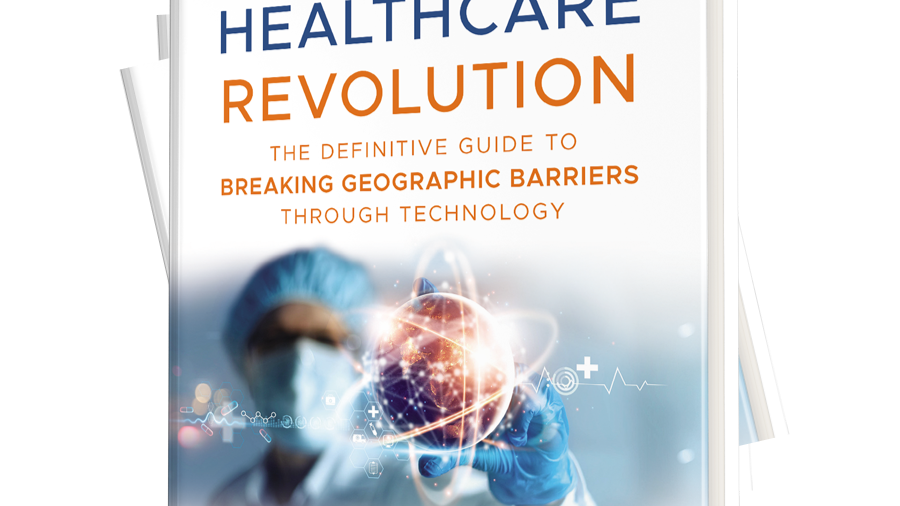
That realization is why I wrote "The Borderless Healthcare Revolution." This Wednesday (tomorrow!), it finally hits the shelves.
The Problem: We Are Feeding the Zombies
I moved from clinical practice to tech strategy because I got tired of the gap.
We have robots that can perform surgery across continents. We have AI that can predict a stroke before it happens.
Yet, we still rely on the "zombie" of healthcare. The fax machine. It just will not die.
I remember realizing the absurdity of this when I was just a mom trying to get immunization records for my kids. I actually caught myself wishing I had a fax machine at home just to get a simple piece of paper.
That is desperation. And that is a broken system.
The Floatplane Paradox
We cannot just sprinkle technology on top of a broken system and expect it to work. We often build digital tools that ignore the reality of the people using them.
In the book, I share a story from Danny Gladden, LCSW, MBA about his time working in rural Alaska. He served remote island communities where accessing mental healthcare was surprisingly complicated.
They had the technology to conduct telehealth visits. However, regulations required indigenous patients to physically travel to a designated healthcare facility to connect virtually with providers. This was the case even if the doctor was sitting comfortably at home.
This meant patients had to take a floatplane or a boat just to log on to a video call.
Imagine telling someone they have to take a boat and a plane to answer a Zoom call. That is the definition of a system that values compliance over care. It was telehealth, but it certainly was not virtual care.
This is what happens when we innovate without fixing the foundation. We create expensive, inconvenient workarounds instead of solving the actual problem.
The Solution: The 5 Pillars of Access
This book is not a memoir. It is a manual for fixing this mess. To fix it, we need to build on five specific pillars. I break these down in detail in the book:
1. The Physical Pillar
We have to bring care to where people actually are. Whether that is a street corner in Syracuse or a rural clinic in Kenya. In the book, I talk about the Health Wagon in Virginia, a mobile unit that has spent decades proving that healthcare can be sustainable when it meets people on their own turf.
2. The Financial Pillar
We need to stop the bleed. Did you know that only 80 cents of every private insurance dollar buys actual care?. The other 20 cents vanishes into administration, commissions, taxes, and margin. That is a tax on innovation we cannot afford. We need sustainable reimbursement models that reward outcomes, not just activity.
3. The Cultural Pillar
Access is not access if we do not speak the language. I do not just mean English or Spanish. I mean cultural competence that builds genuine connection. In Singapore, for example, the HealthHub app lets every resident toggle instantly among English, Mandarin, Malay, and Tamil. That is how you build a system that respects the user.
4. The Digital Pillar
This is about more than broadband. It is about usability. If a patient needs a PhD to use your portal, you have failed. We need infrastructure that supports interoperability so that patient data flows securely across clinics, pharmacies, and hospitals.
5. The Trust/Knowledge Pillar
Without trust, the best algorithm in the world is useless. We have to address historical mistrust. If patients do not trust the system, they will not use the tools we build, no matter how advanced they are.
Why This Matters Now
We are at an inflection point.
The borders are falling. We are seeing success stories globally, from India's eSanjeevani platform serving millions to Rwanda's use of drones for blood delivery.
We have the tools. We just need the will to use them.
Your Action Plan for Wednesday
- Grab the book. It is the blueprint you have been waiting for.
- Audit your own work. Are you building barriers or bridges?
- Join the fight. Share this with a colleague who is ready to build a system that actually works.
Let’s get to work.
Dr. Matt
P.S. To the "tech bro" I met while researching Chapter 3. Yes, AI can do amazing things. But until it can hold a patient's hand, we still need humans in the loop.