Health Technology Strategist - Physician - Author - Speaker 

Dr. Sarah Matt operates at the intersection of clinical medicine, technology innovation, and healthcare access transformation.

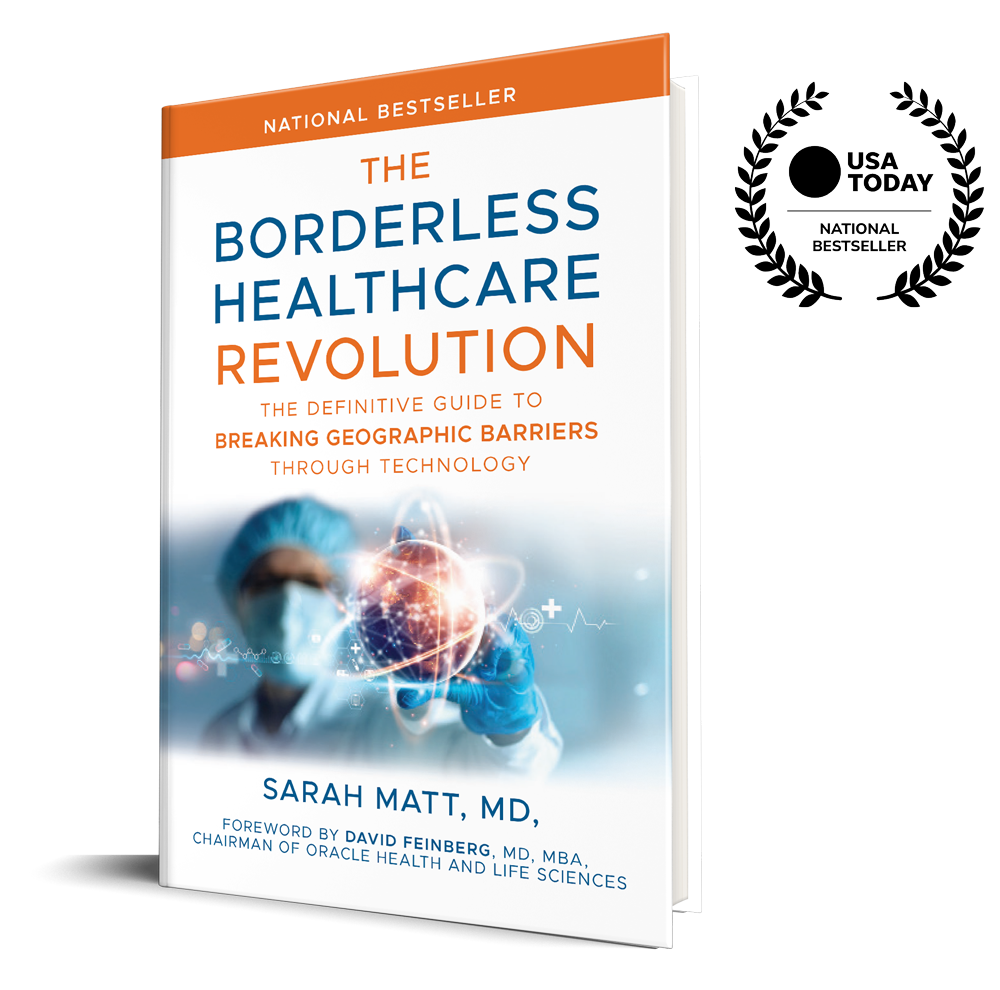
NATIONAL BESTSELLER

About the book

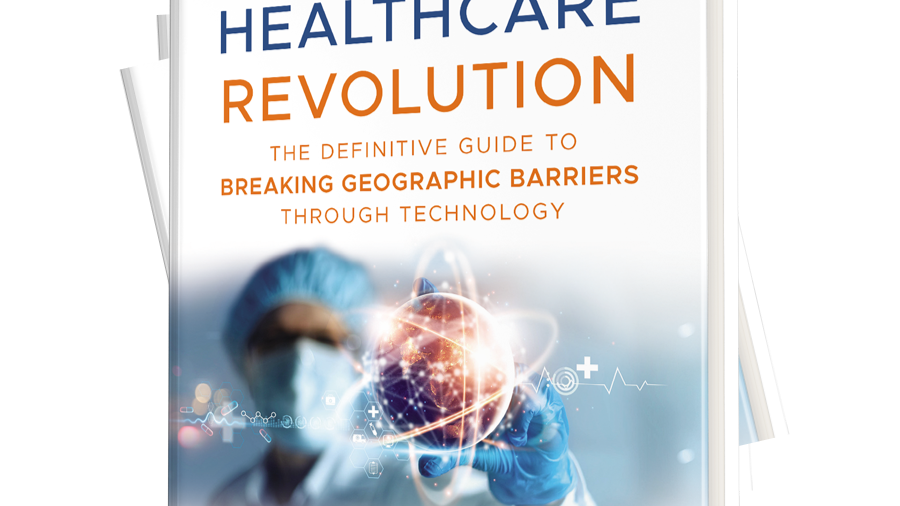
The Borderless Healthcare Revolution: The Definitive Guide to Breaking Geographic Barriers Through Technology is your field guide to a future in which a clinic visit is never farther away than the nearest screen and a surgeon’s skill can cross oceans in real time. Dr. Sarah Matt translates frontier-grade innovation into day-to-day practice for clinicians, health-system strategists, and policymakers who refuse to accept geography as destiny.

“Here in the US, patients with little access to technology are all too often cut out of healthcare services. Dr. Matt has spent her career working diligently at the intersection of practice and technology to enable access to care and better outcomes. Her stories and research from the field will illuminate and empower a future in which all people, regardless of geography, will have the healthcare access and opportunities they need.”

—Betty Rabinowitz, MD, Founder and Former CEO of EagleDream Health

about

Sarah Matt, MD, MBA

Dr. Matt is a surgeon turned health technology strategist, author, and speaker. Her work focuses on how digital tools, from remote surgery to telemedicine to AI, can expand access to healthcare and eliminate the traditional boundaries that separate patients from care. Through her various leadership roles at Oracle and Sovato, Dr. Sarah Matt has worked with healthcare organizations of all sizes around the world, giving her firsthand experience with access challenges and solutions across different healthcare systems, cultures, and economic environments. She has seen what works, what doesn't, and most importantly, what's possible when we reimagine healthcare delivery without geographic constraints.

LEARN MORE

In the Media

Oracle “Perspectives on Health & Tech” Podcast

Connected healthcare: The value of cloud

In this episode, Dr. Matt (as Oracle Health VP of Product Strategy) and Dr. Michelle Flemmings discussed how cloud technology can ease clinical workloads and improve patient experience . Dr. Matt co-hosted the conversation, covering use cases from intuitive AI assistants to data-driven efficiency

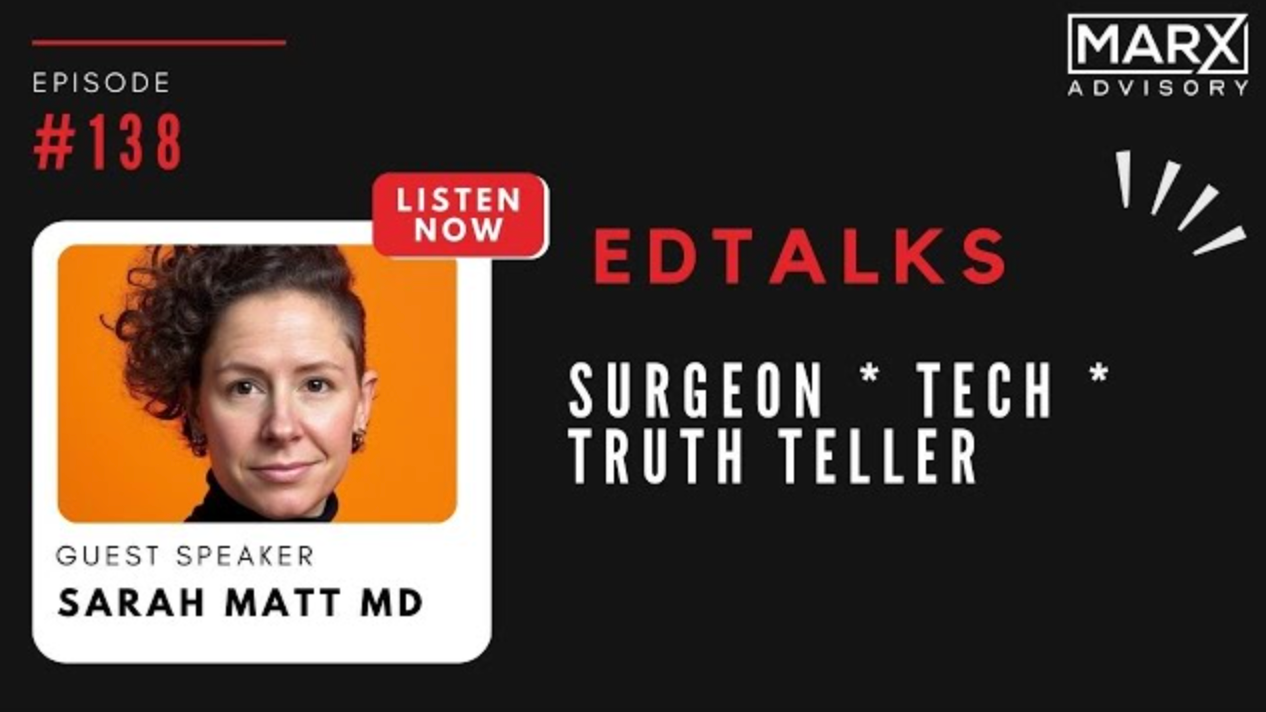
EDTalks with Ed Marx

“Surgeon * Tech * Truth Teller”

In a recent EDTalks video interview (Episode 138, “Surgeon * Tech * Truth Teller”), host Edward Marx sat down with Dr. Sarah Matt to discuss her journey as a surgeon-turned-health tech leader. This ~10-minute video was published on Ed Marx’s YouTube channel, highlighting Dr. Matt’s candid insights on healthcare innovation and “truth telling” in tech leadership .

Engagements

Speaking

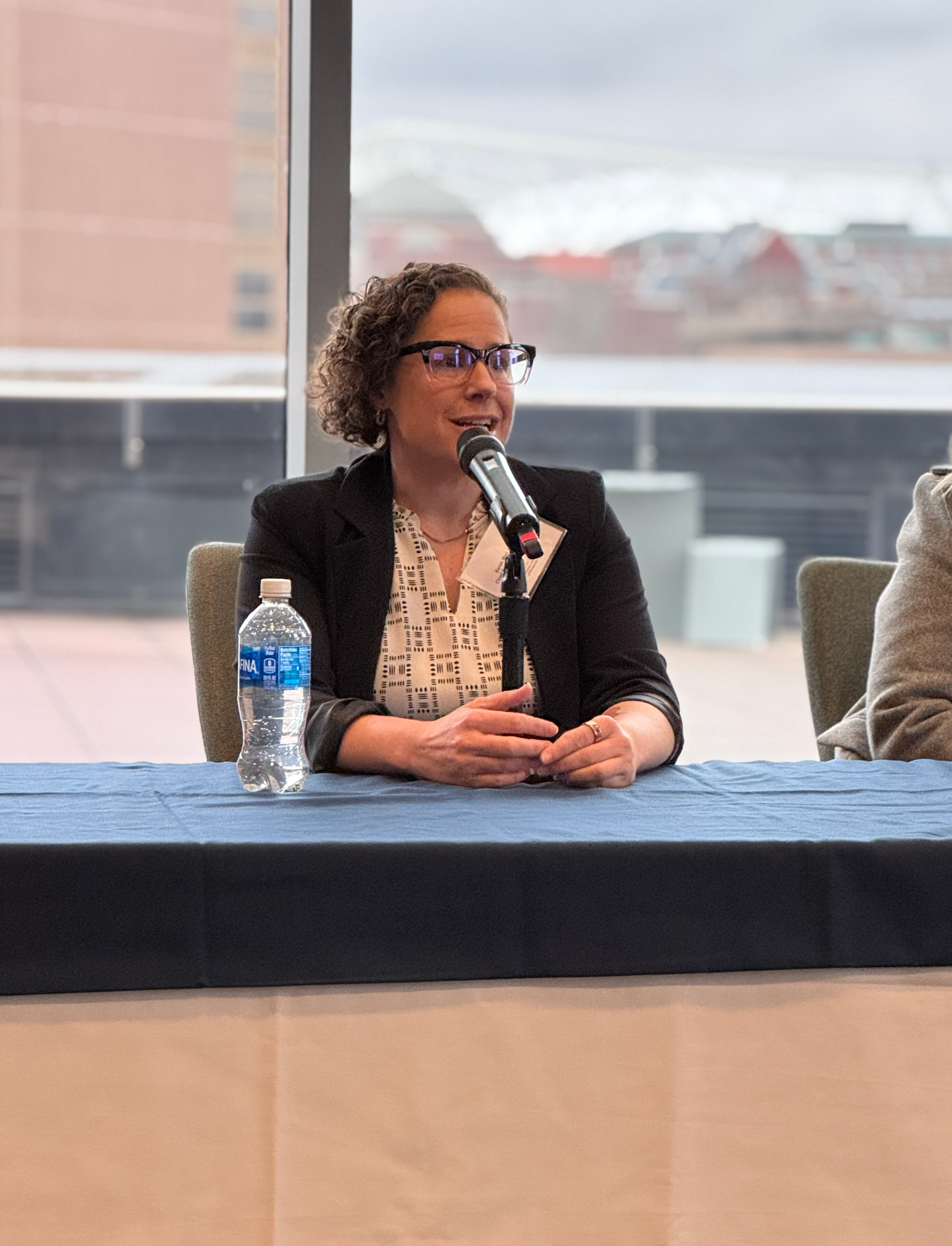
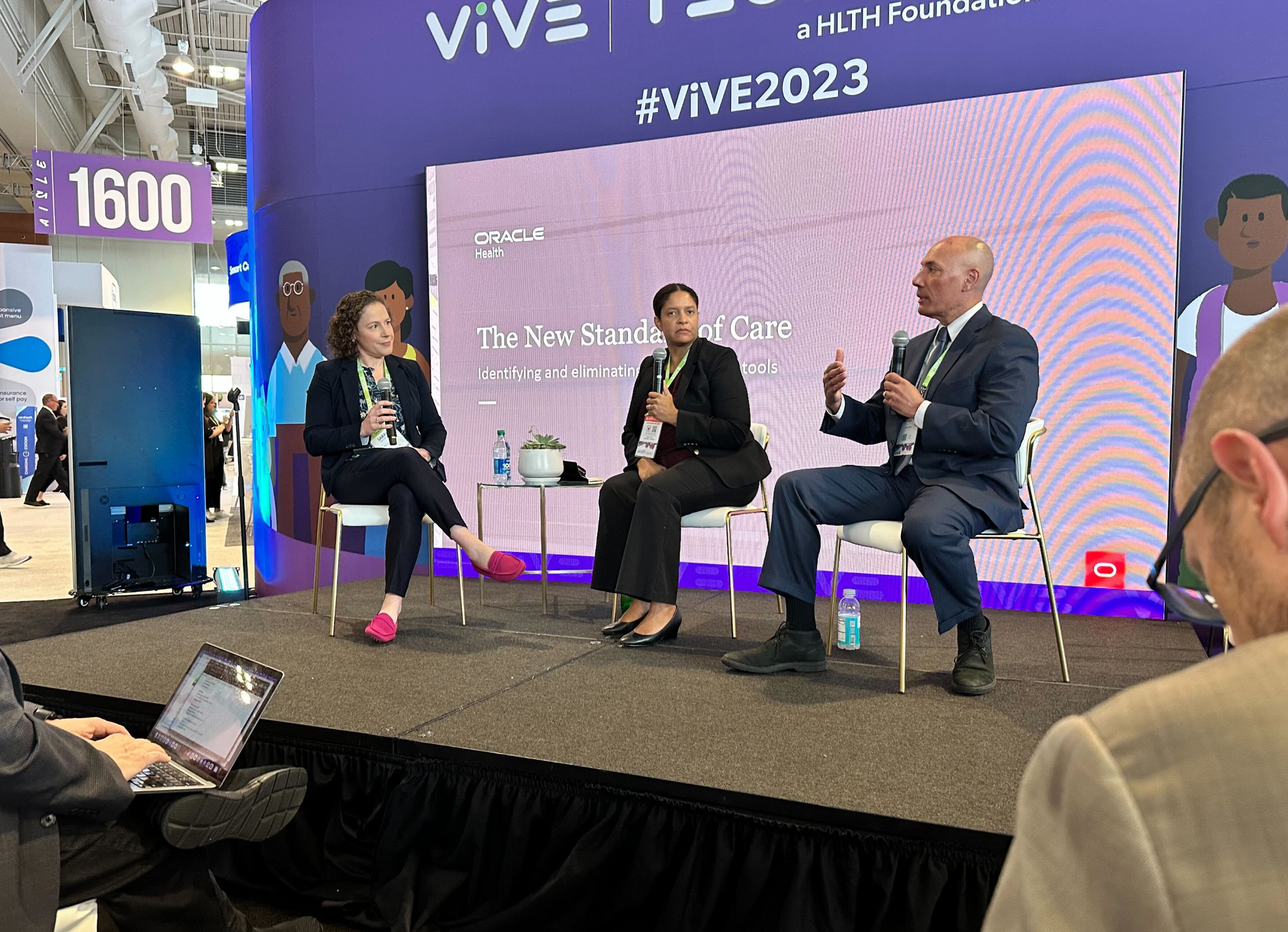
Dr. Sarah Matt delivers keynotes and leads panels on AI in global healthcare, tech-enabled primary care, building trust at scale, and countless talks on leadership and strategy.

WORK WITH SARAH

Articles

December 16, 2025
A few weeks ago, we discussed the ACCESS Model .  That was the heavy lifter, the massive payment overhaul defining how money moves for chronic care. It dominated the headlines because it impacts reimbursement for two-thirds of Medicare beneficiaries. But while the industry focused on payment rails, CMS quietly dropped a second program that defines what that money is actually for. It is called the MAHA ELEVATE Model . The acronym is dense: M ake A merica H ealthy A gain: E nhancing L ifestyle and E valuating V alue-based A pproaches T hrough E vidence. Despite the political branding attached to the President’s MAHA Commission , the substance represents the single largest philosophical shift I have seen in Medicare in a looooong time. For the first time, the government is putting significant capital ($100 million) behind the idea that "lifestyle" is not just advice; it is medicine. Here is why this matters as much as the ACCESS reimbursement codes. The End of "Sick Care" Funding? For decades, Medicare has operated as a catastrophic insurance policy. It was designed to pay for the crash, not the maintenance. As a general surgeon, I understand this reality. We are reimbursed to fix the failure, such as the necrotic bowel, the blocked artery, or the gangrenous toe. You're not reimbursed to spend forty-five minutes discussing the nutritional architecture or stress mechanisms that caused the failure in the first place. The system was designed to pay for the intervention, not the prevention. ELEVATE challenges that default. Released on December 11, this pilot authorizes reimbursement for functional medicine approaches that target root causes rather than symptom management. We are talking about potential coverage for: Nutritional Optimization: Not just "dietary advice," but medically tailored nutrition plans. Stress & Cortisol Management: Interventions targeting nervous system regulation. Sleep Architecture: Treating sleep as a biological imperative, not a luxury. Metabolic Reset: Focusing on insulin sensitivity before the prescription pad comes out. The "How": Technology as the Enabler This is where the strategist side of my brain gets interested. Historically, "lifestyle medicine" failed to scale because it is labor-intensive. A surgeon can perform a procedure in an hour, while a lifestyle intervention requires months of coaching, tracking, and adjustment. The ELEVATE model explicitly calls for "digital evidence generation." This is the green light for Health Tech. To get paid under this model, providers will need to rely on remote patient monitoring (RPM) and AI-driven data analysis to prove that the "lifestyle intervention" is actually working. They need to show that the biomarkers are moving. This forces a collision between two worlds that usually stay separate: Clinical Medicine and Wellness Tech . If you are a startup building tools for metabolic tracking, cortisol monitoring, or continuous glucose monitoring (CGM) for non-diabetics, you just got a reimbursement pathway. Why Now? Why is CMS doing this? Because they have done the math. The solvency of the Medicare trust fund cannot survive the current trajectory of chronic disease. We cannot stent our way out of the metabolic crisis. We cannot pill our way out of the inflammation crisis. The ACCESS Model ensures that people can get to a doctor. The ELEVATE Model ensures that once they get there, the doctor has tools other than a scalpel or a prescription pad. The Borderless Application This brings us back to the core theme of the Borderless Healthcare Revolution. A borderless system isn't just about geography; it is about erasing the borders between "clinical care" and "daily life." When a patient leaves the four walls of the hospital, their care usually stops. Under ELEVATE, the care effectively starts when they leave the hospital. It incentivizes the physician to care about what happens in the patient's kitchen and bedroom (sleeping!), not just what happens in the exam room. What to Watch This is a pilot program limited to 30 proposals initially. But do not ignore it. In government healthcare, "pilots" are how they test the water before turning the ship. For my clinical colleagues: Start looking at how you document lifestyle advice. "Patient advised to lose weight" will no longer cut it. You will need data, plans, and outcomes. For my tech colleagues: The "Wellness" category just graduated to "Clinical Grade." Adjust your roadmaps accordingly. As you dive into the rest of the week, take a look at the full fact sheet and ask yourself: are you built for Sick Care, or are you ready for Health Care? #StayCrispy -Dr. Matt
December 9, 2025
It was August in Texas, and the heat hit like a physical wall the second I stepped outside. I was not in an air conditioned operating room. I was walking up a cracked concrete path to a mobile home to see a patient named Maria. The window mounted air conditioning unit hummed desperately against the rising temperature. This was my third attempt to find her. We had previously been unable to find her trailer after two attempts to work through an interpreter, poor phone connections, and constantly changing locations of residence. Standing on that porch, sweating through my scrubs, I realized something that changed the trajectory of my career. I realized that geography is destiny. In our current system, your ZIP code predicts your lifespan more accurately than your genetic code. That realization is why I wrote "The Borderless Healthcare Revolution." This Wednesday (tomorrow!), it finally hits the shelves. The Problem: We Are Feeding the Zombies I moved from clinical practice to tech strategy because I got tired of the gap. We have robots that can perform surgery across continents. We have AI that can predict a stroke before it happens. Yet, we still rely on the "zombie" of healthcare. The fax machine. It just will not die. I remember realizing the absurdity of this when I was just a mom trying to get immunization records for my kids. I actually caught myself wishing I had a fax machine at home just to get a simple piece of paper. That is desperation. And that is a broken system. The Floatplane Paradox We cannot just sprinkle technology on top of a broken system and expect it to work. We often build digital tools that ignore the reality of the people using them. In the book, I share a story from Danny Gladden, LCSW, MBA about his time working in rural Alaska. He served remote island communities where accessing mental healthcare was surprisingly complicated. They had the technology to conduct telehealth visits. However, regulations required indigenous patients to physically travel to a designated healthcare facility to connect virtually with providers. This was the case even if the doctor was sitting comfortably at home. This meant patients had to take a floatplane or a boat just to log on to a video call. Imagine telling someone they have to take a boat and a plane to answer a Zoom call. That is the definition of a system that values compliance over care. It was telehealth, but it certainly was not virtual care. This is what happens when we innovate without fixing the foundation. We create expensive, inconvenient workarounds instead of solving the actual problem. The Solution: The 5 Pillars of Access This book is not a memoir. It is a manual for fixing this mess. To fix it, we need to build on five specific pillars. I break these down in detail in the book: 1. The Physical Pillar We have to bring care to where people actually are. Whether that is a street corner in Syracuse or a rural clinic in Kenya. In the book, I talk about the Health Wagon in Virginia, a mobile unit that has spent decades proving that healthcare can be sustainable when it meets people on their own turf. 2. The Financial Pillar We need to stop the bleed. Did you know that only 80 cents of every private insurance dollar buys actual care?. The other 20 cents vanishes into administration, commissions, taxes, and margin. That is a tax on innovation we cannot afford. We need sustainable reimbursement models that reward outcomes, not just activity. 3. The Cultural Pillar Access is not access if we do not speak the language. I do not just mean English or Spanish. I mean cultural competence that builds genuine connection. In Singapore, for example, the HealthHub app lets every resident toggle instantly among English, Mandarin, Malay, and Tamil. That is how you build a system that respects the user. 4. The Digital Pillar This is about more than broadband. It is about usability. If a patient needs a PhD to use your portal, you have failed. We need infrastructure that supports interoperability so that patient data flows securely across clinics, pharmacies, and hospitals. 5. The Trust/Knowledge Pillar Without trust, the best algorithm in the world is useless. We have to address historical mistrust. If patients do not trust the system, they will not use the tools we build, no matter how advanced they are. Why This Matters Now We are at an inflection point. The borders are falling. We are seeing success stories globally, from India's eSanjeevani platform serving millions to Rwanda's use of drones for blood delivery. We have the tools. We just need the will to use them. Your Action Plan for Wednesday Grab the book. It is the blueprint you have been waiting for. Audit your own work. Are you building barriers or bridges? Join the fight. Share this with a colleague who is ready to build a system that actually works. Let’s get to work. Dr. Matt P.S. To the "tech bro" I met while researching Chapter 3. Yes, AI can do amazing things. But until it can hold a patient's hand, we still need humans in the loop.
December 2, 2025
Happy Tuesday! If you read one thing this week, make it this. Yesterday, the Centers for Medicare & Medicaid Services (CMS) quietly dropped one of the most significant policy shifts for digital health in the last decade. It’s called the ACCESS Model , and if you are building, investing in, or delivering technology-enabled care, this is the signal you have been waiting for. For years, the industry has been stuck on a "billing code treadmill." We build incredible tools; AI coaching, continuous remote monitoring, predictive analytics, but we are forced to shoehorn them into antiquated Fee-for-Service (FFS) codes that pay for minutes spent rather than health achieved. With ACCESS, CMS is finally cutting the red tape. They are proposing a model that pays for outcomes , not clicks. Grab your coffee. Let’s break down exactly what this means for the future of healthtech. The Friction Point: Why FFS Failed Digital Health To understand why ACCESS is a big deal, we have to look at the status quo. Currently, if you want to treat a Medicare beneficiary using digital tools, you are likely relying on Remote Patient Monitoring (RPM) or Remote Therapeutic Monitoring (RTM) codes. These are better than nothing, but they are rigid. They require specific device definitions, minimum data transmission days, and strict time-logging requirements. The result? Activity-based care. Providers are incentivized to maximize data points and call minutes to ensure reimbursement, even if the patient just needs a passive nudge or an automated intervention. We are maximizing activity, not necessarily efficiency or outcomes. The Solution: Outcome-Aligned Payments (OAPs) The Advancing Chronic Care with Effective, Scalable Solutions (ACCESS) Model changes the currency of care. Instead of billing for every 20-minute increment of time, participating organizations will receive a recurring payment (essentially a subscription fee) to manage a patient’s condition. Here is the kicker: You only get the full payment if the patient gets better. CMS is testing Outcome-Aligned Payments (OAPs) . This gives providers complete flexibility on how they deliver care. Do you want to use a fancy FDA-cleared wearable? A text-message-based AI coach? A telehealth nutritionist? Go ahead. CMS doesn't care about the method anymore; they care about the metric. If you can prove that you lowered a patient’s blood pressure or controlled their A1c using a specific tech stack, you get paid. This aligns the financial incentive with the clinical goal: keeping the patient healthy with the least amount of friction. The Scope: Who is this for? CMS is not starting small. They are targeting the conditions that drive the vast majority of Medicare spending. The model focuses on Original Medicare beneficiaries with: Hypertension: The silent killer. Diabetes: The metabolic crisis. Chronic Musculoskeletal Pain: A massive driver of opioid use and mobility issues. Depression & Anxiety: Recognizing mental health as a core chronic comorbidity. This is a 10-year voluntary model, meaning CMS is playing the long game. They aren't looking for a quick pilot; they are looking to build a permanent alternative to Fee-for-Service. The "Tech" in HealthTech What’s fascinating about the RFA (Request for Applications) details is the language CMS is using. They are explicitly calling for "technology-supported care." They list examples that would have been unimaginable in a CMS memo ten years ago: Wearable devices for continuous monitoring. Asynchronous apps for lifestyle coaching. Telehealth software for on-demand interaction. This is a massive validation for the digital health sector. CMS is acknowledging that the future of chronic care isn't a quarterly 15-minute office visit; it’s continuous, data-driven support that lives in the patient’s pocket. Dr. Matt’s Strategic Analysis: Is this a slam dunk? Not exactly. Here is the nuance you need to consider before you rush to apply The Risk of "Outcomes" "Pay for Performance" is the holy grail, but it is also dangerous. How do you risk-adjust for a patient who is non-compliant regardless of your tech? How do you account for social determinants of health (SDOH) that might spike a patient's blood pressure despite your best algorithm? The ACCESS model will rely on risk-adjusted benchmarks, but the devil will be in the math. If the benchmarks are too aggressive, providers might shy away from the sickest patients, the exact opposite of CMS's goal. 2. The "Co-Management" Opportunity One of the smartest parts of this model is the coordination with primary care. ACCESS participants (likely specialists or dedicated tech-enabled provider groups) can co-manage patients with a beneficiary's primary care doctor. The Opportunity: This creates a business model for "Bolt-on" healthtech companies. You don’t have to replace the PCP; you can be the specialized "hypertension management layer" that plugs into their practice, handling the daily digital grind while they handle the holistic care. 3. The Transparency Engine CMS plans to publish the risk-adjusted outcomes of participating organizations. This is the "Yelpification" of clinical results. Imagine a world where a PCP can look up a dashboard and see: "Company A controls diabetes in 80% of patients, but Company B only manages 60%." Referrals will flow to the performers. Timeline & Next Steps If you are a digital health founder, a forward-thinking provider, or an investor, the clock has started. TBD: Request for Applications (RFA) has not yet been released. The specific details on payment rates and risk adjustment will be here (crossing fingers!). April 1, 2026: Application Deadline for Cohort 1. This is a tight turnaround. July 1, 2026: The program goes live. My Advice: Start building your consortiums now. Digital health vendors need to partner with provider groups (you'll have to decide who/how to apply). If you have a tool that actually works, meaning it drives clinical results, not just engagement, this is your moment to shine. We are moving from the era of "Digital Health" to just "Health"; efficient, scalable, and paid for by results. 🔗 Explore the Official CMS ACCESS Model Page Until next week #StayCrispy, Dr. Matt 

More Posts

Contact

For Partnerships, Media Inquiries, Speaking Engagements, and Bulk Sales: 


*Unfortunately, I do not have the bandwidth to give individual advice over email.

Main Contact